
Harbor Rest Stays Collective
A network of small lodgings that publish quiet hours, kitchen access, and how guests use a day without a booked excursion. We revisit their notes when seasons change.
We write about a date with nothing booked because that date has its own order, and most guides skip it.
magnesitoid began when three people who take long trips kept answering the same question from friends: not “where should I go,” but “what do I actually do on the day I leave blank.” This page explains how the project grew, how we check what we publish, and what happens if you ask us to place a pause day inside your route.

The project did not start as a brand. It started as shared notes after trips where one empty day changed the rest of the week more than an extra museum did.
For years the three of us traveled on dense schedules and treated a free morning as a failure of planning. Then, separately, each of us tried keeping one full date open on purpose. The results were uneven: boredom arrived early, neighbors were loud, and the urge to “just go somewhere small” returned by noon. But the day after those experiments was consistently easier to start.
We compared notes and found the same pattern. The difficulty was never a lack of ideas for rest. It was not knowing the sequence: when to decide, what to do first after waking, how far a walk without a destination should go, and how to close the evening without reopening the map. That sequence existed in our own trips but rarely appeared in travel writing.
magnesitoid exists to document that sequence in plain language. We are not selling a mood or a transformation. We describe formats that real people use: a full day indoors, a short loop near the lodging, a long sit in one cafe, or a day reduced to food and sleep. Each format has different requirements from the stay and from the traveller’s tolerance for stillness.
We chose this focus because it sits between itinerary planning and lifestyle advice, and neither side handles it well. Route builders assume every day needs a point on the map. Wellness language promises more than a travel site can deliver. A pause day is simpler and harder than both: it is a date you protect on purpose, with a small set of actions that keep it from collapsing into guilt or errands.
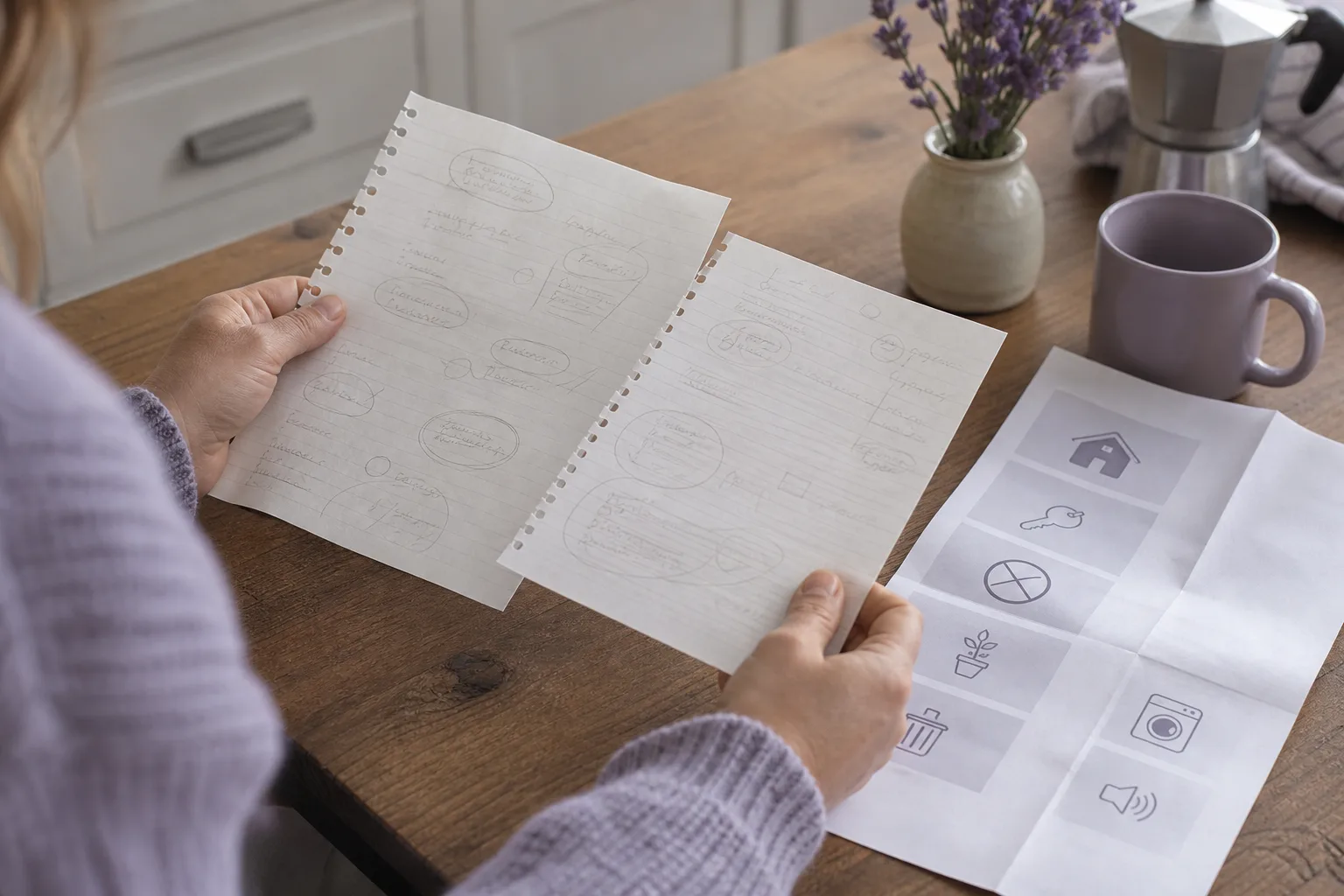
Every published guide begins in a trip one of us actually took, or in a consultation where the traveller described what happened hour by hour. We do not copy forum threads or repackage listicles. The first draft is always a timeline: what was decided the night before, what happened before noon, whether the map was opened, and how the evening ended.
Before a piece goes live, a second person reads for gaps. Can a reader follow the order without knowing our jargon? Are house rules mentioned where they matter? Did we accidentally promise that boredom will disappear? We remove claims we cannot support from our own notes and mark anything that depends on a specific lodging type.
When a partner stay shares quiet hours, kitchen access, or how guests use a day without an excursion, we date that note and link it to the article it informed. If the stay later changes policy, we update the article or add a clear line that the detail should be confirmed again. We would rather leave a section narrow than keep a detail that no longer matches what the stay reports.
Medical or recovery language does not appear in our process. If a draft drifts toward telling someone how their body should respond to rest, we cut it. Travel writing can describe actions; it cannot replace a specialist. That rule keeps the editorial line consistent across articles, consultations, and this page.
Consultations are not a software login. They are a structured conversation that ends in a document you can use on the trip.
We ask for length, lodging type, transfer days, and whether anyone in your group has tried an empty date before. You do not need a polished itinerary. A list of dates and one sentence about what feels too full is enough to begin.
Not every gap is a good pause day. We look for a night after a long move, before a dense stretch, or beside lodging that supports staying in. If the only open date is a transfer morning, we say so and suggest a smaller format instead of forcing a full blank day.
Indoor days need different things than corner walks. We check kitchen access, noise patterns, and whether a short loop exists without crossing a busy road. The outline names one primary format and one fallback if weather or noise shifts.
The outline includes what to decide in the evening: which format is active, what stays off the list, and the first action after waking. That sentence is often the most useful part, because morning doubt is predictable.
The result is not a platform account. It is a readable outline with the sequence, lodging reminders, and a short note on how to close the day for the next morning. You can follow it on paper; nothing requires an app or a login.
An empty day still happens somewhere. It uses a room, a hallway, maybe a shared kitchen. We treat that as a relationship with a place, not as private time that ignores everyone else in the building.
These points are not moral performance. They are practical conditions that keep a pause day from becoming a stress day for the people around you. When a consultation mentions tension with staff or neighbours, we adjust the format before we adjust the attitude.
“We only list a partner when their house rules and quiet patterns are written down and confirmed twice in different seasons.”
Partners are independent stays and small travel-education groups. None of them pays for placement on the site. We list them when their practices help readers plan a credible pause day.
A network of small lodgings that publish quiet hours, kitchen access, and how guests use a day without a booked excursion. We revisit their notes when seasons change.
A travel-education group that teaches hour-by-hour logging on long routes. We exchange anonymised timelines that show how pause days succeed or fail in practice.
An informal registry of cafes that tolerate long sits at off-peak hours. We do not treat it as a rating site; entries include when to arrive and when to leave.
If a partner changes ownership or policy, we remove the reference until we can verify the detail again. Readers should confirm house rules directly with any stay before they rely on our notes.
Send the dates you already have and where a blank day might fit. We will reply with questions about lodging, transfers, and how new this practice is for you—not with a generic packing list.
Contact UsThe articles page collects longer pieces on deciding the night before, short walks, first empty days, and how food and sleep stay on the list. Each one stands alone.
Learn Moremagnesitoid provides knowledge about the options inside a travel day that has no booked program. The pages describe formats, sequences, and consultations. They are written so you can see how we work and decide whether that help is useful.
Nothing here is a personal instruction for your health, energy, or recovery. If you have questions about tiredness, sleep, or how your body is responding to a trip, speak with a qualified specialist. A website about itineraries cannot answer those questions.
Conditions change from one stay to the next. House rules, quiet hours, kitchen access, weather, and local transport do not repeat on command. Check the current details with the lodging and with local services before you rely on any example.
You choose how to travel. magnesitoid is not responsible for decisions made after reading the site or after a consultation. Neighbors may be loud. Rain may cancel a short walk. The voice that says you should be elsewhere may stay until evening. We describe those limits because they are part of the practice, not because we can remove them.